#SQL quality and diagnostics
JustyBase combines syntax parsing, semantic/schema validation, quality rules, and optional database validation. The diagnostic prefix tells you which layer raised the issue:
| Prefix | Meaning | Typical action |
|---|---|---|
LEX* |
Lexer could not classify the text | Fix an invalid character, literal, or token boundary. |
PAR* |
Parser could not build the expected statement structure | Read the first error and repair the clause around it. |
SQL* |
Parser/semantic validation, often relation, column, type, or identifier scope | Refresh metadata or correct the object/reference. |
NZ* |
SQL quality rule for warehouse safety, style, or performance | Review the warning in the context of workload and policy. |
NZP* |
NZPLSQL procedure rule | Fix block, variable, return, or procedure contract issues. |
#Rule families
- Safety: destructive statements without a predicate, risky
TRUNCATE, and operations that need confirmation. - Correctness: unknown relations/columns, ambiguous references, invalid object qualification, malformed aliases, and type-aware comparisons.
- Performance: leading wildcard
LIKE, functions in predicates, implicit casts in joins, unnecessaryOR,SELECT *, unbounded ordering, and distribution choices. - Style: keyword case, aliases, quoted identifiers, and
UNIONversusUNION ALLchoices. - Types: SQL025/SQL026 warnings compare column metadata with literal classification. They require typed metadata and are not emitted as certain errors without it.
- NZPLSQL: procedure structure, language/returns clauses, unmatched blocks,
SELECT … INTO, unused variables,OUTassignment,ELSIF,THEN,CASE, andRETURNchecks.
#Severity and policy
Set a rule to error, warning, information, hint, or off under justybase.linter.rules. justybase.linter.enabled controls the linter surface; advanced parser-based validation remains the core syntax path. Severity changes the editor and Problems panel, not the SQL sent to the database.
#Before and after
#Destructive update
-- Before: NZ003 / safe-execute confirmation
UPDATE SALES.ORDERS SET status = 'CLOSED';

-- After: explicit scope
UPDATE SALES.ORDERS
SET status = 'CLOSED'
WHERE order_date < CURRENT_DATE - 90;#Wildcard search
-- Before: NZ005 can prevent an index-friendly access path
WHERE customer_name LIKE '%smith';

-- After: choose the intent explicitly
WHERE customer_name ILIKE 'smith%';#Join type mismatch
-- Before: implicit cast risk
ON fact.customer_id = dim.customer_id_text

-- After: make the conversion and data-quality decision visible
ON CAST(fact.customer_id AS VARCHAR(32)) = dim.customer_id_text
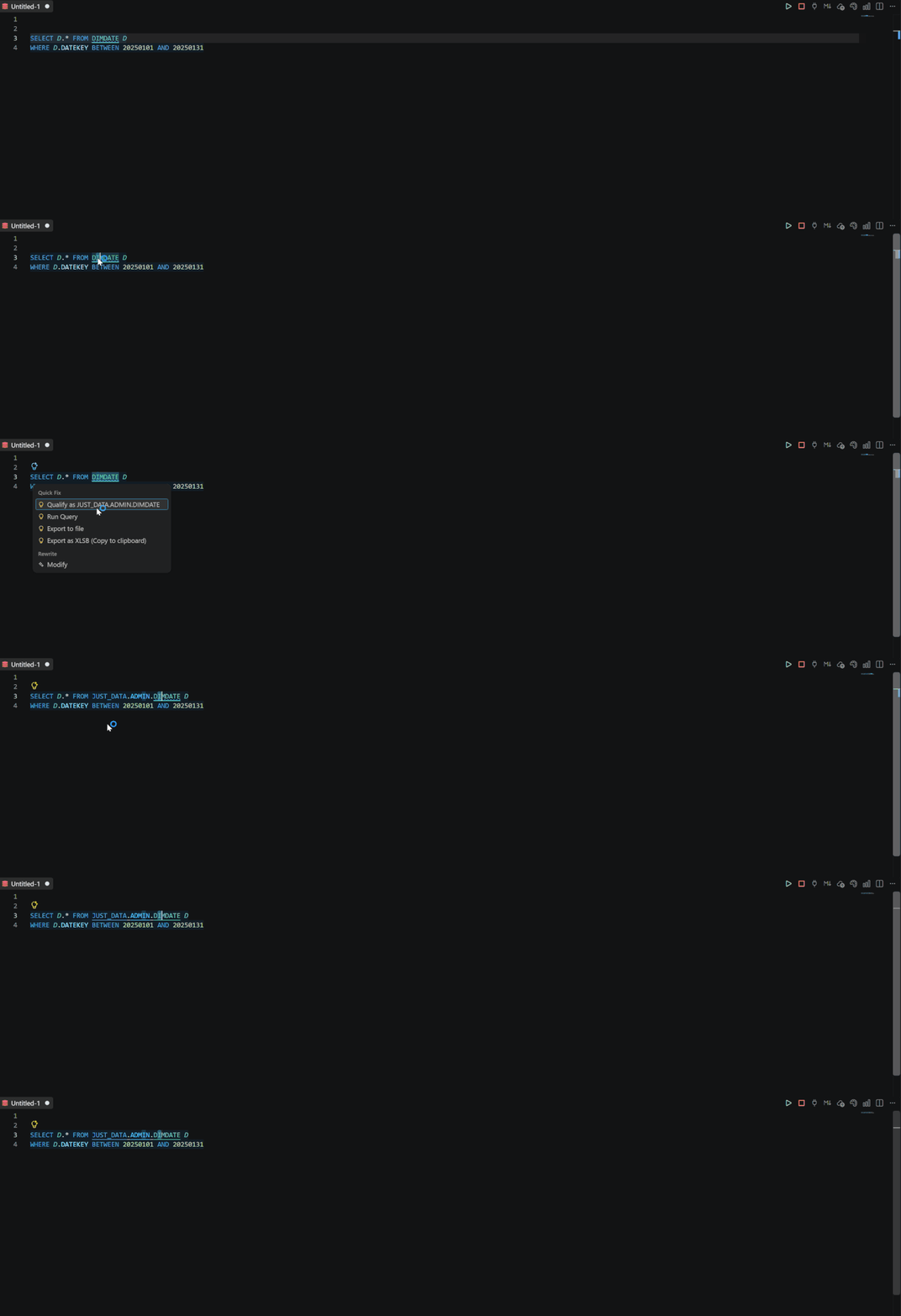
The correct rewrite is workload- and dialect-dependent. A quick fix is a proposal, not permission to execute.
#Quick-fix classes
| Class | Behavior |
|---|---|
| Automatic | The action has an exact, local edit with no database side effect. Review the diff before saving. |
| Preview required | The action changes a statement or needs DDL/import context; JustyBase shows the proposed SQL or mapping first. |
| Suggestion only | The rule cannot safely infer intent; use the diagnostic as a review prompt. |
Parser-based rename and navigation use token ranges. Regex heuristics are limited to procedure rules that run only when the CST parse cannot provide a reliable result. See the quick-fix coverage matrix for the implementation-level inventory.
#NZPLSQL boundary
The CST procedure path handles structural rules first. A string-body procedure is reparsed with offset mapping. Migrated NZP rules run through the regex fallback only when parsing fails, so a malformed procedure does not silently produce confident semantic results. Always fix the first PAR*/NZP* structural error before interpreting later warnings.
#Database-dependent diagnostics
SQL003/SQL004/SQL007-style relation and qualification checks can be useful without a connection, but column existence and SQL025/SQL026 type comparisons require metadata. The extension-host validator maps catalog FORMAT_TYPE into ColumnInfo.dataType; the LSP provider maps the metadata bridge type into the same contract. If those paths disagree, report the database kind and a minimal query.
#Copilot handoff
The safest AI loop is diagnostic → schema/DDL context → explanation → suggested fix → diff review → user execution. AI SQL Assistant documents what is sent, what is read-only, and where a user confirmation is required.